
← All news

Perkins Griddle & Go

Perkins Launches First Griddle & Go Fast-Casual Site in New Jersey

By UK Franchise Opportunities Editorial TeamPublished
Perkins Launches First Griddle & Go Fast-Casual Site in New Jersey — UK franchise news

Restaurant chain Perkins is launching its first Griddle & Go fast-casual branch in Flemington, New Jersey, with the site being operated by franchisees Giuseppe and Nicole Lahara.

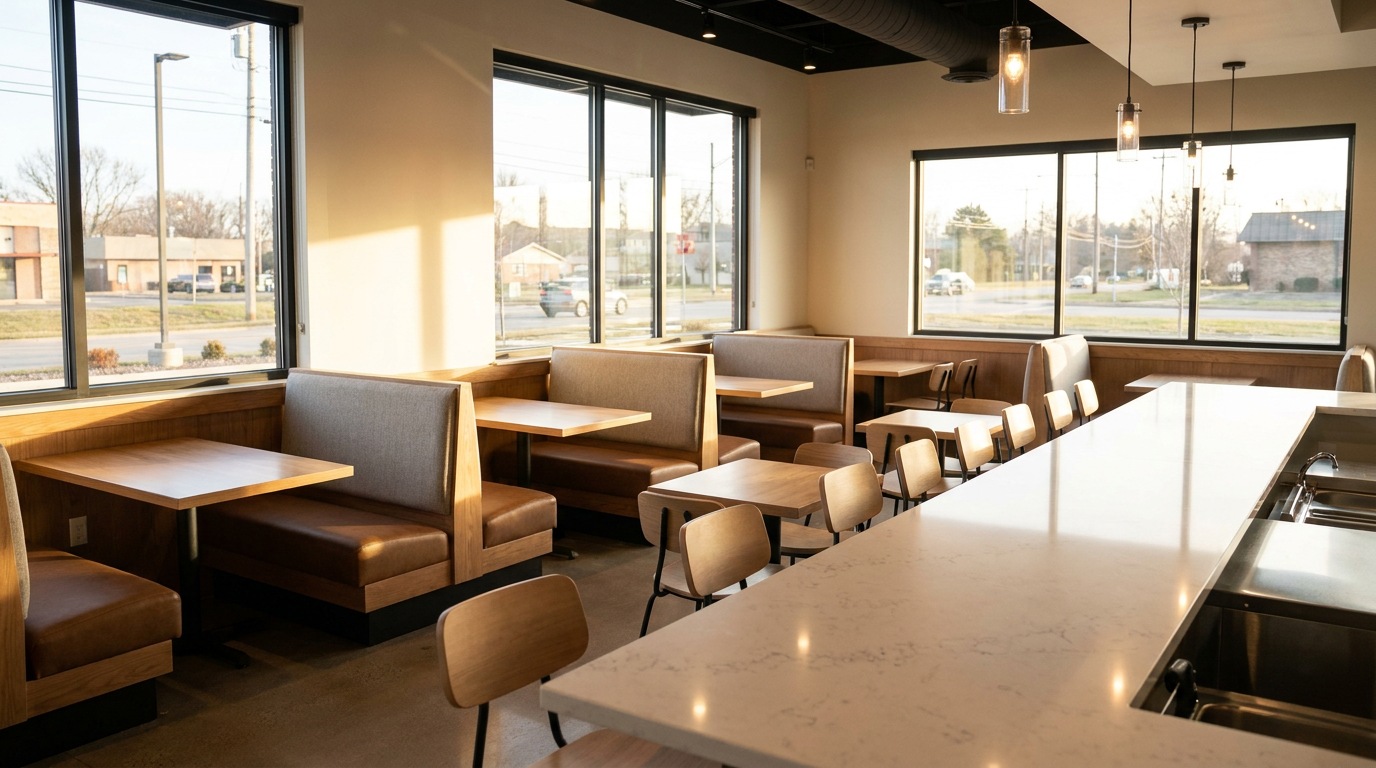
Perkins is preparing to launch its inaugural Griddle & Go location in the United States, having selected Flemington, New Jersey, for the debut on 19 October. The opening introduces the brand's new fast-casual format to the American market, representing a structural evolution in how the long-standing hospitality brand serves customers. The launch also marks the company's official return to New Jersey.

The Flemington business will be operated by local franchisees Giuseppe and Nicole Lahara. By partnering with independent operators to spearhead the rollout, the franchisor is relying on local management to establish the format in a territory where the wider brand previously traded. The venture presents a significant operational departure from traditional full-service dining models, prioritising speed and convenience under an established commercial identity.

While specific trading targets, store dimensions, and exact fit-out costs for the Flemington venue have not been released, the opening reflects a defined strategy to test and grow an adapted format through the franchise model. The launch will serve as an initial benchmark for how the fast-casual variation performs in everyday trading conditions.

Sector Evolution and the Fast-Casual Shift

The launch in New Jersey illustrates a wider, long-term trend across the commercial foodservice sector. Heritage hospitality brands that built their reputations on extensive sit-down dining spaces are increasingly developing streamlined, compact concepts. Rising commercial property rents, changing labour costs, and shifting consumer expectations have compelled restaurant networks to rethink how their physical estate functions.

Fast-casual formats bridge the gap between traditional table-service dining and rapid takeaway counters. By paring back floor space, simplifying equipment lines, and focusing on high-volume transactions, operators can open premises in commercial locations that would be unviable for large-format restaurants. This flexibility allows brands to access commuter routes, smaller high-street units, and transport hubs where footfall is high but dwell time is short.

Consumer habits have also shifted sharply towards rapid service, collection, and off-premises dining. Adapting an established brand to meet these demands allows a franchisor to capture market share from younger or time-pressed demographics without necessarily abandoning its traditional customer base. However, transitioning a legacy full-service brand into a condensed operational model requires precise menu engineering and supply chain alignment to ensure brand integrity remains intact.

Considerations for Prospective UK Franchise Buyers

For prospective franchise buyers in the United Kingdom, developments of this nature highlight the distinct realities of investing in food and beverage concepts. Entering a fast-casual or food-to-go franchise typically requires significant capital expenditure. Beyond the initial franchise fee, investors must budget for commercial kitchen equipment, extraction systems, architectural layout designs, leasehold commitments, and working capital to support the business through its initial launch phase.

When assessing a new or condensed operational model within an existing franchise network, prospective franchisees must conduct thorough due diligence. Essential areas of enquiry include:

  • Unit-level economics: How do the gross and net margins of a smaller format compare to standard locations, particularly when product lines and average transaction values are adjusted?
  • Property requirements: What are the minimum spatial, utility, and extraction specifications needed, and what level of support does the franchisor provide during lease negotiations?
  • Supply chain obligations: Are franchisees tied to mandatory suppliers for proprietary ingredients or packaging, and how are commercial rebates or wholesale price increases managed?
  • Operational support: What initial training and on-site guidance are provided to the management team and frontline staff ahead of trading?

Prospective investors should scrutinise the figures presented within a franchise prospectus or information pack with professional detachment. Promotional materials and illustrative financial models provided by franchisors are projections, not guarantees. It is vital to assess whether the figures are drawn from established corporate-owned pilot units or represent theoretical trading models. UK buyers should engage an independent accountant specialising in franchise evaluation to stress-test cash flow forecasts, and instruct a qualified solicitor to review the franchise agreement before signing or paying non-refundable deposits.

Implications for Franchisors and Established Networks

The introduction of a new sub-brand or trading format carries both strategic opportunities and practical challenges for franchisors and existing franchisees within a system. Successfully modernising a business model can open new demographic markets and create multi-unit expansion pathways for experienced operators.

However, network leaders must balance innovation with the commercial interests of their broader system. Key considerations include:

  • Territory protection: Franchisors must establish clear contractual guidelines to prevent smaller, takeaway-oriented units from cannibalising sales from existing, full-service franchise territories nearby.
  • Proof of concept: New formats should be operated and refined thoroughly under commercial conditions before being marketed widely across an expansion pipeline.
  • Brand consistency: Streamlined models must deliver the service standards and food quality associated with the parent brand to prevent reputational damage.
  • Operational simplification: Menu reductions and kitchen efficiencies must genuinely reduce labour overheads rather than merely compressing complex tasks into a smaller physical space.

Looking Ahead

The performance of the Flemington site will provide an important indicator of whether the Griddle & Go format can deliver sustainable returns in an increasingly competitive fast-casual landscape. Industry observers will be watching the Laharas' launch closely to see how consumers respond to the updated service style, how operational flow holds up during peak trading periods, and whether the parent company uses the New Jersey site as a springboard for wider regional franchise expansion.

Reported from publicly available coverage. Details were correct at the time of writing.