
← All news

Subway

Subway Introduces New Blueprint Store Format Across EMEA Expansion

By UK Franchise Opportunities Editorial TeamPublished Updated
Subway Introduces New Blueprint Store Format Across EMEA Expansion — UK franchise news

Subway has revealed Blueprint, an updated store format and brand concept for the EMEA region, as the sandwich franchise sets an ambition to double its presence to 10,000 outlets.

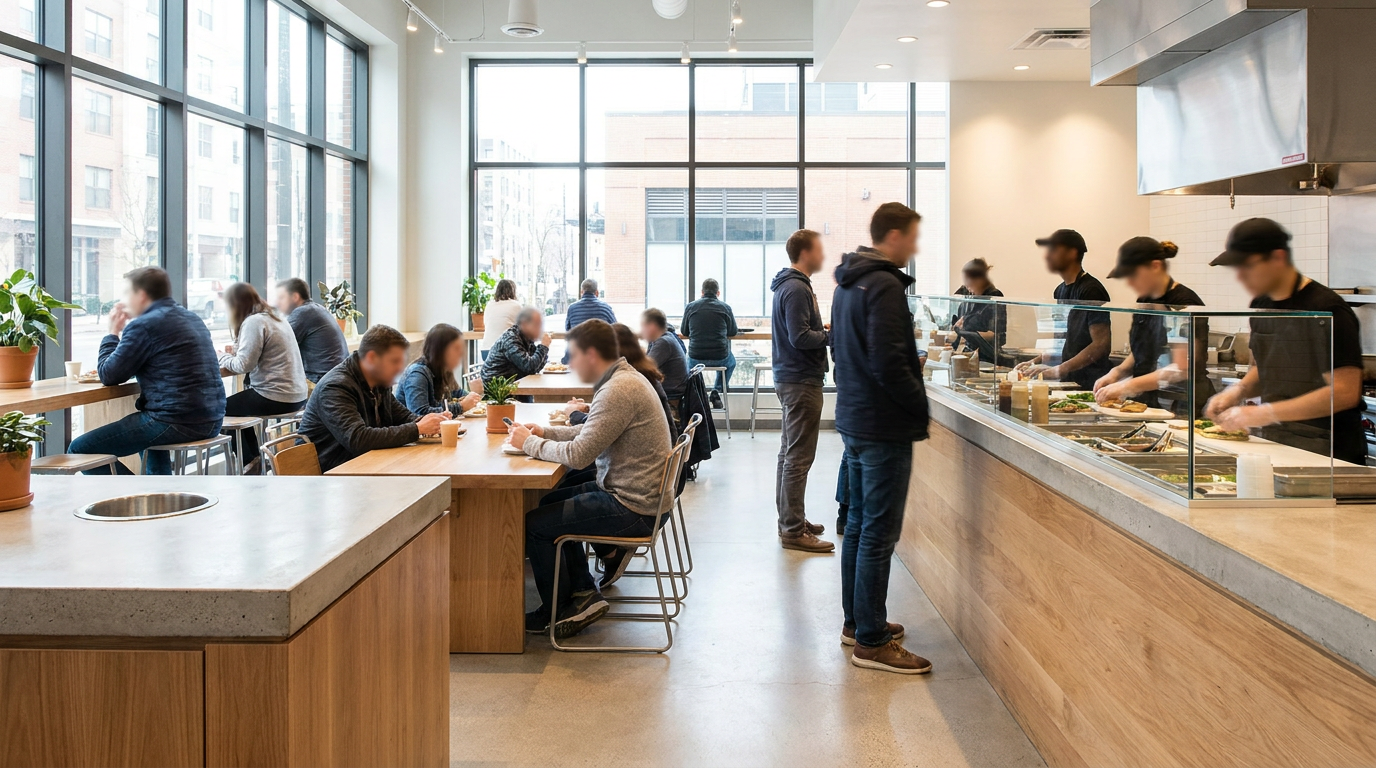
Subway has announced the launch of Blueprint, a redesigned restaurant format and brand platform being deployed across its Europe, Middle East, and Africa (EMEA) operating region. The initiative represents a substantial visual and operational modernisation for the multinational quick-service sandwich chain as it seeks to overhaul its customer environment and operational layout.

Alongside the introduction of the Blueprint concept, the brand has confirmed an aggressive commercial expansion target across the EMEA territory. Subway aims to double its regional store count to reach a total footprint of 10,000 operational restaurants. The franchisor has not published a specific completion date or a breakdown of site allocations per individual country within the region.

The announcement indicates a concerted effort to standardise modern store formats across diverse European, Middle Eastern, and African markets. For prospective and current network operators, the transition signifies a major evolution in how the brand presents itself to consumers, handles customer throughput, and configures its commercial kitchens.

What the Blueprint Rollout Signals About the Quick-Service Sector

The unveiling of the Blueprint platform reflects broader operational trends currently shaping the food and beverage franchise landscape. Fast-casual and quick-service restaurant networks operate in an increasingly competitive retail environment, where legacy store layouts frequently struggle to satisfy modern consumer demands for speed, digital integration, and on-premises comfort. Established franchisors must periodically refresh their visual identities and estate layouts to sustain footfall, maintain brand equity, and prevent newer market entrants from capturing market share.

Furthermore, setting a strategic target of 10,000 restaurants demonstrates that major franchise systems continue to view the EMEA region as a core engine of physical unit growth. Despite shifting consumer spending habits and broader commercial property challenges across European high streets, large food brands are doubling down on brick-and-mortar development. A physical estate overhaul of this magnitude also signals an appetite for greater operational efficiency. Contemporary restaurant formats typically focus on streamlining food preparation, reducing kitchen congestion, and catering simultaneously to in-store diners, takeaway customers, and third-party delivery couriers.

Practical Guidance for UK Franchise Buyers Assessing Major Food Brands

Investing in a high-profile quick-service franchise during a brand-wide format transition presents both opportunities and distinct financial considerations. When a franchisor introduces a new design scheme such as Blueprint, incoming franchisees are usually required to adopt the latest specification from day one. These turnkey or bespoke fit-outs dictate commercial kitchen apparatus, interior finishes, signage, and front-of-house technology, which directly influence initial capital expenditure requirements.

Prospective investors evaluating this type of opportunity must carry out thorough due diligence using the franchisor's official franchise prospectus or information pack. It is essential not to rely on headline brand recognition alone. Key questions to ask the franchisor include:

  • What are the verified fit-out and construction costs for the new design format compared to previous estate specifications?
  • How has the redesigned layout performed in operational pilot locations regarding throughput, average transaction value, and overhead costs?
  • What are the mandatory upgrade timelines, and does the franchisor provide structured capital support or equipment leasing arrangements?
  • What measures are in place to manage territory allocations, ensuring that doubling regional unit counts does not cannibalise existing franchisee revenues?

When examining the financial figures inside a disclosure pack, prospective franchisees should review working capital assumptions with an independent accountant experienced in franchising. Financial projections should be tested against prevailing UK inflation, commercial utility rates, and real-world construction costs. Prospective business owners are encouraged to engage with accredited advisors and refer to ethical standards upheld by organisations such as the Quality Franchise Association (QFA) to verify that contractual terms and financial obligations are balanced and transparent.

Strategic Implications for Franchisors and Existing Operators

The introduction of a regional brand overhaul carries significant operational consequences across an entire franchise network. For the brand owner, rolling out a uniform concept across dozens of sovereign nations requires tight supply chain management, regional architectural adaptation, and sustained franchisee alignment. For established business owners operating under older franchise agreements, store transformations can trigger operational disruption and significant capital reinvestment.

  • Mandatory store refurbishments: Existing franchise operators are typically bound by their franchise agreements to complete cyclical store refits, requiring them to budget for capital improvements to bring older premises into line with the Blueprint standard.
  • Brand value consistency: System-wide rollouts eliminate disparities between legacy sites and modern locations, protecting brand perception and delivering a cohesive customer experience across all retail touchpoints.
  • Territory and saturation monitoring: Aiming for 10,000 regional restaurants increases site density, requiring franchisors to maintain rigorous mapping protocols so that aggressive portfolio expansion respects agreed operational territories.
  • Competitive benchmarking: Competing franchisors within the food and beverage industry will need to assess their own physical estates, as modernisation by a market leader raises consumer expectations across the casual dining sector.

What to Watch Next

Market observers will be watching the initial phase of the Blueprint deployment to gauge how rapidly the new store design is integrated across individual EMEA markets, including the UK. Attention will naturally centre on whether existing franchisees embrace the capital expenditure required for conversions, how commercial landlords respond to the updated layout requirements, and the speed with which the brand secures the prime retail locations needed to progress toward its 10,000-unit target.

Reported from publicly available coverage. Details were correct at the time of writing.