
← All news

Slice House

Slice House Expands Californian Presence with Brentwood Franchise Site

By UK Franchise Opportunities Editorial TeamPublished Updated
Slice House Expands Californian Presence with Brentwood Franchise Site — UK franchise news

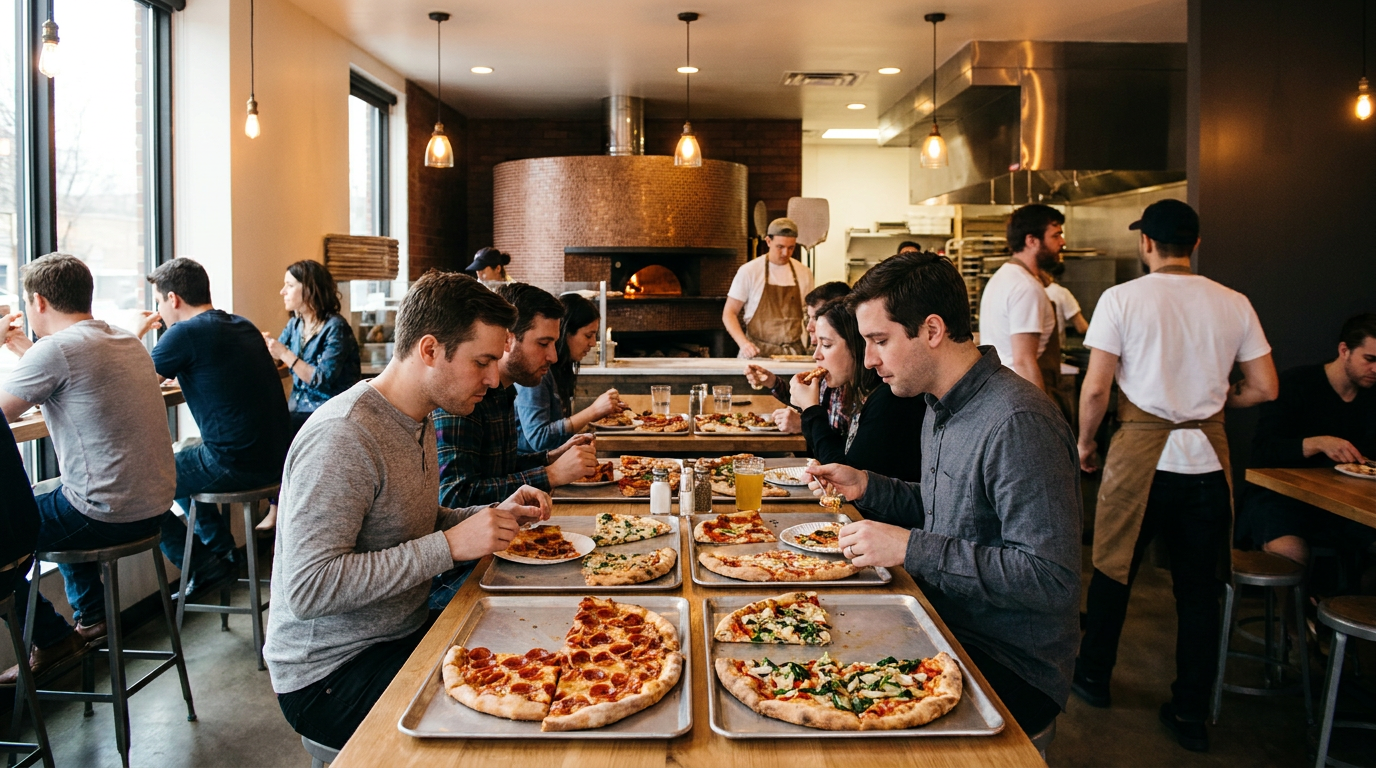
Fast-casual pizza franchise Slice House by Tony Gemignani has announced plans to launch a new branch in Brentwood, California, marking its debut site in Contra Costa County.

Fast-casual pizza brand Slice House by Tony Gemignani has announced plans to launch a new franchised location in Brentwood, California. The forthcoming site represents the brand's first venture into Contra Costa County, marking an expansion of its existing footprint within the state.

The pizzeria is scheduled to open on 17 October 2026 at 2523 Sand Creek Road. It will be situated within The Streets of Brentwood, an open-air retail and entertainment complex. The concept, founded by pizzaiolo Tony Gemignani, centres on a fast-casual service model providing artisan pizza recipes developed throughout his culinary career.

While this particular launch takes place in the United States, commercial network expansion of this nature provides relevant insights for investors and prospective business owners monitoring hospitality models. In particular, it illustrates how specialised quick-service and fast-casual concepts navigate site selection, territorial growth, and multi-year planning cycles.

What the Expansion Signals About the Fast-Casual Hospitality Sector

The selection of an outdoor shopping destination indicates continued confidence in physical retail hubs as anchors for food and beverage operators. Rather than relying solely on residential delivery territories, contemporary fast-casual brands frequently target mixed-use retail parks where steady footfall, leisure visits, and retail traffic intersect. Securing units in regional shopping venues enables food operators to capture both midday convenience diners and evening destination trade.

Furthermore, the development highlights ongoing consumer appetite for premium or chef-led concepts within fast-casual settings. Traditional quick-service restaurants have historically competed primarily on speed and low price points. By contrast, crafted fast-casual businesses seek to bridge the gap between high-volume counter service and full-service casual dining, placing greater emphasis on product provenance, specialist recipes, and recognised culinary credentials.

The timeline announced for the Brentwood opening—projected for late 2026—also demonstrates the extended lead times often required in modern commercial property development. Sourcing suitable premises, negotiating head leases, securing local planning permits, and executing complex kitchen fit-outs frequently require multi-year roadmaps before a single customer is served.

Practical Context for UK Franchise Buyers Evaluating Food Concepts

For individuals exploring food and beverage franchises in the United Kingdom, specialist hospitality models demand rigorous technical and commercial due diligence. Quick-service and fast-casual operations generally carry significant capital requirements compared to home-based or management-only franchises. Prospective franchisees must evaluate whether a concept's brand strength can offset the fixed operating overheads inherent to commercial leases.

Food operations require specialised commercial extraction, high-capacity utility connections, fire safety infrastructure, and strict adherence to food hygiene legislation. Fit-out expenses can vary substantially based on the shell condition of the unit. Consequently, any prospective investor must ascertain exactly which equipment and building works are included within the initial franchise fee, and which must be financed independently through capital expenditure or equipment leasing.

When reviewing a franchise prospectus or information pack, prospective franchisees should carry out thorough checks on the financial figures presented:

  • Assess capital requirements comprehensively: Scrutinise the breakdown between working capital and hard capital costs. Ensure the financial model accounts for operational deficits during the initial trading months before customer awareness matures.
  • Verify operational margins: Examine whether historical trading figures provided in the disclosure pack reflect gross profit or net profit after accounting for royalty fees, local marketing levies, waste, and labour inflation.
  • Interrogate the supply chain: Determine whether franchisees are legally bound to purchase proprietary ingredients exclusively through the franchisor's nominated distributors, and clarify whether markups are applied that could compress unit-level margins.
  • Review territorial protections: Confirm the precise radius or demographic criteria governing territory exclusivity to ensure future network growth does not cannibalise existing trade.

Prospective operators should also query the franchisor on how site identification and lease negotiations are managed. A robust franchise network will generally assist franchisees with demographic mapping, landlord negotiations, and architectural compliance rather than leaving site acquisition entirely to the franchisee.

Strategic Lessons for Franchisors and Existing Franchisees

The progression of brand estates into new administrative areas offers distinct operational lessons for established franchisors and multi-unit operators planning disciplined network growth.

  • Extended pipeline planning: Establishing launch milestones far in advance allows franchisors and franchisees to coordinate equipment procurement, marketing campaigns, and staffing pipelines without compressed pre-opening schedules.
  • Strategic commercial clustering: Expanding into adjacent regions—such as moving into an adjoining county—allows franchised networks to achieve brand recognition efficiencies while keeping regional management and distribution logistics viable.
  • Destination-led positioning: Aligning unit openings with established retail centres reduces reliance on standalone marketing by leveraging existing consumer traffic generated by neighbouring retail anchors.
  • Founder and concept equity: Building marketing narratives around specific expertise or proprietary techniques helps distinguish a franchise from generic market competitors, justifying premium pricing structures.

For operators already managing sites within an expanding system, regional launches reinforce wider brand equity, which can assist in driving commercial awareness across broader territories.

What to Watch Next

As the project advances toward its scheduled October 2026 launch date, observers will monitor the physical development of the Brentwood location and how effectively the brand adapts to the local commercial landscape. The timeline also provides a benchmark for observing how broader commercial property conditions, construction costs, and retail mall occupancy trends influence the execution of long-term franchise expansion strategies.

Reported from publicly available coverage. Details were correct at the time of writing.