
← All news

More Than Loft Ladders

More Than Loft Ladders Opens Long Eaton Head Office and Expands into North Hampshire

By UK Franchise Opportunities Editorial TeamPublished Updated
More Than Loft Ladders Opens Long Eaton Head Office and Expands into North Hampshire — UK franchise news

More Than Loft Ladders has launched a new head office in Long Eaton featuring a dedicated training academy and media studio, alongside appointing franchisee Ant Dyboll to cover North Hampshire.

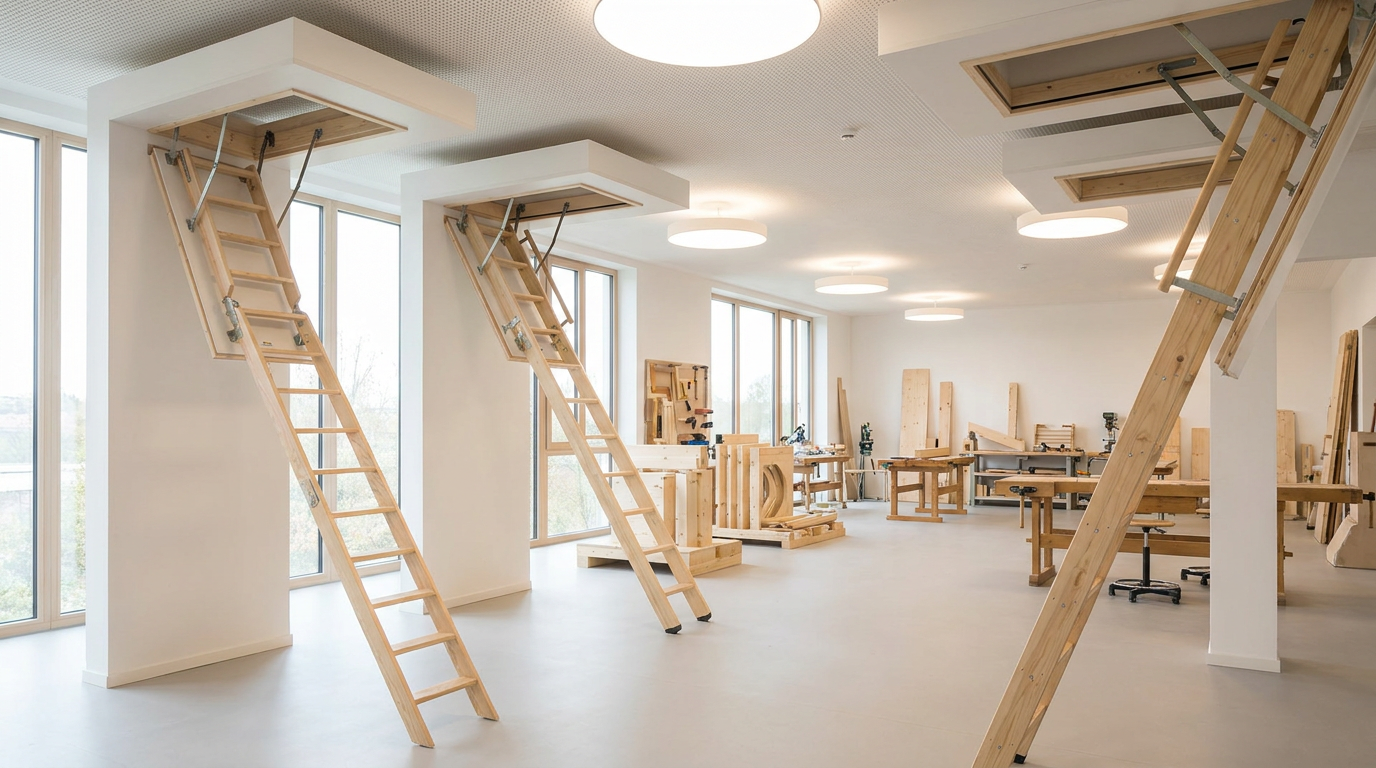
Home storage and loft access specialist More Than Loft Ladders has relocated its central operations to a newly established headquarters in Long Eaton, Derbyshire. The premises incorporate a dedicated training facility, branded as the MTLL Academy, alongside an in-house content studio designed to support network-wide marketing and digital communications.

Alongside the infrastructure investment at head office, the brand has grown its operating footprint in the south of England. Ant Dyboll has joined the network as a new franchisee, taking responsibility for establishing and developing the company's presence across the North Hampshire territory.

The dual announcement demonstrates continued operational development within the business, pairing physical support facilities at the administrative core with geographical growth into suburban and commuter-belt housing markets.

Market Signals in the Domestic Property Services Sector

Investment in dedicated training and administrative headquarters highlights wider trends across the UK domestic maintenance and home improvement sector. Demand for practical loft storage, boarding, and access solutions remains closely linked to broader housing market dynamics, where escalating relocation costs, stamp duty obligations, and elevated mortgage rates often encourage homeowners to improve their existing properties rather than purchase larger homes.

Maximising unused square footage, particularly unboarded loft space, offers a cost-effective alternative to building extensions or moving house. For franchise networks operating in this space, capturing market share requires consistent operational standards, reliable customer service, and structured trade skills, especially when trading in competitive regional territories such as Hampshire.

Furthermore, the inclusion of a dedicated media and content studio reflects the increasing reliance on digital channels to generate local trade leads. Whereas domestic trade businesses previously depended heavily on traditional print directories and local flyers, modern franchise networks must produce steady streams of video demonstrations, before-and-after case studies, and social media material to reassure domestic customers and win residential contracts.

Evaluating Van-Based and Trade Franchise Opportunities

Prospective franchise investors looking at domestic trade concepts need to understand the structural demands of the business model before committing capital. Businesses of this nature are typically operated as management franchises or owner-operator trades, often starting with a single liveried van and scaling up into multi-vehicle fleets as local customer volume develops.

Anyone examining a franchise prospectus or information pack for a home services business should carry out thorough due diligence across several operational areas:

Training and accreditation: Buyers should investigate the practical curriculum provided at the franchisor's academy or training centre. It is essential to confirm whether technical training covers health and safety legislation, working at height protocols, electrical safety basics, and structural carpentry, alongside practical tuition in sales, quote generation, and back-office software.

Territory sizing and demographics: A viable territory must contain an adequate concentration of privately owned, detached, semi-detached, and terraced houses with accessible roof spaces. Modern apartments or rental-dominated areas offer limited scope for loft ladder installations and floor boarding. Franchisees must verify how territorial boundaries are drawn, whether they are exclusive, and what minimum qualifying criteria were used to establish the area.

Scrutinising financial projections: The financial illustrations provided in an introductory disclosure pack should never be accepted without independent examination. Prospective franchisees must engage a qualified accountant familiar with franchise business models to test the assumptions. Key variables include conversion rates from initial telephone enquiries to booked home surveys, average transaction values per installation, trade material costs, van leasing expenses, and fuel consumption. It is equally important to speak directly with existing network franchisees to benchmark actual earnings against the franchisor's initial models.

Strategic Implications for Franchisors and Franchisees

Central investments in bespoke training centres and dedicated media production facilities carry clear strategic benefits for existing franchisees and offer valuable lessons for expanding franchise systems.

Centralised training centres help standardise operational quality across geographically dispersed territories. For existing franchisees, standardisation protects brand reputation; a substandard installation in one county can diminish consumer trust in another. Facilities like the MTLL Academy also shorten the time required to onboard installation assistants or additional technicians as individual franchisees scale up their operations.

Similarly, centralised content generation takes the burden of marketing asset creation away from operators on the ground. Individual franchisees rarely possess the time, equipment, or technical expertise to film, edit, and produce broadcast-quality marketing assets while actively managing installations and customer quotes.

  • Brand consistency: Centralised training ensures identical installation, survey, and customer care standards are applied across both mature and newly launched regions.
  • Marketing efficiency: Professional content production at head office supplies the entire network with digital collateral, reducing regional marketing expenditure and improving lead conversion.
  • Network valuation: Formal training facilities and professional headquarters infrastructure enhance the overall valuation of the franchise enterprise, aiding future network development.
  • Scalable onboarding: Dedicated physical academies allow franchisors to train multiple incoming franchisees or their staff members without disrupting regular commercial operations.

Future Developments to Watch

Following the establishment of the Long Eaton central hub and the launch of the North Hampshire territory, observers will be watching how effectively the brand translates centralised training capabilities into accelerated regional expansion. Key indicators of progress will include the pace of new territory recruitment across southern England, the rate at which newly onboarded franchisees reach operational capacity, and the continued adaptation of home service franchise models to changing consumer spending priorities in the UK economy.

Reported from publicly available coverage. Details were correct at the time of writing.