
← All news

Minnie Bird

Minnie Bird Establishes Infrastructure to Support Future Franchise Expansion

By UK Franchise Opportunities Editorial TeamPublished Updated
Minnie Bird Establishes Infrastructure to Support Future Franchise Expansion — UK franchise news

Fried chicken brand Minnie Bird is developing internal systems and operational infrastructure to support planned franchise expansion beyond its initial restaurant locations.

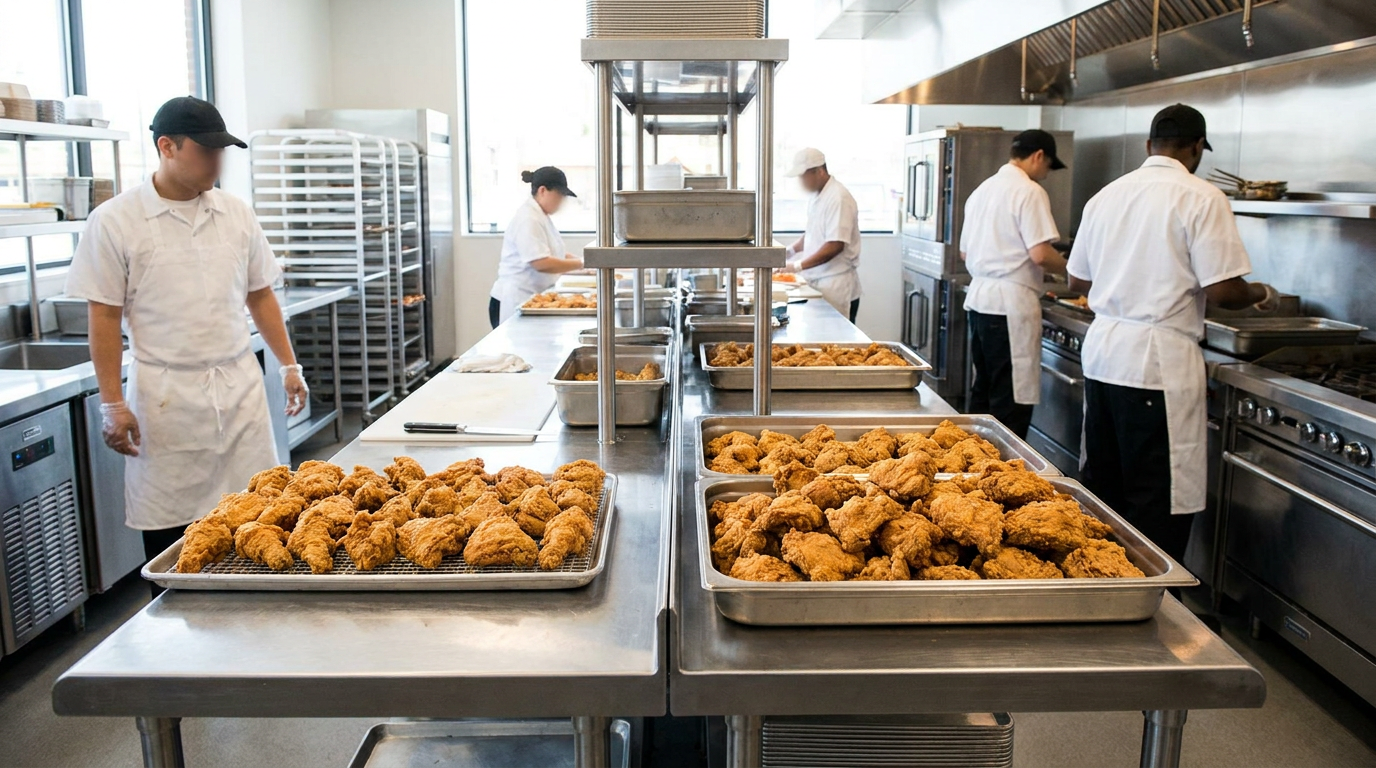
Foodservice brand Minnie Bird has confirmed it is developing the internal infrastructure required to underpin future franchise expansion. Operating within the fast-casual dining segment with a menu centred on hand-breaded chicken, the business currently runs its initial portfolio of restaurants while designing systems that will enable the concept to be replicated across additional locations.

Rather than pursuing immediate network growth, the business is concentrating on establishing back-office procedures, operational manuals, and central support mechanisms. The brand has indicated that while consumers interact primarily with the customer-facing elements—namely food quality, service delivery, and unit atmosphere—the viability of expanding beyond its initial footprint relies on establishing less visible operational foundations.

Details regarding the precise timeline for a commercial franchise launch, unit investment requirements, and target territories have not yet been disclosed. The brand's stated strategy prioritises operational readiness over rapid territory acquisition, reflecting a measured approach to multi-site scalability.

Market Signals in Fast-Casual Hospitality

The development reflects broader structural realities within the competitive quick-service and fast-casual poultry segment. Chicken-led concepts have experienced sustained consumer demand across hospitality markets, driven by accessible price points, versatile daytime and evening trade, and strong alignment with both dine-in and off-premises delivery channels.

However, the sector also presents distinct operational complexities. Maintaining product integrity across hand-breaded fresh food requires tight inventory controls, consistent prep standards, and rigorous adherence to food safety and hygiene protocols. In scaling brands, variation in kitchen output between individual branches poses a direct risk to brand reputation and customer retention.

By prioritising system architecture before recruiting franchisees, businesses in this category acknowledge that product popularity alone cannot sustain a franchise network. Kitchen workflows, staff training schedules, waste management programmes, and ingredient procurement arrangements must be fully codified in early-stage locations to ensure they can withstand delegation to independent franchise operators.

Evaluating Restaurant Franchise Opportunities: Guidance for Prospective Buyers

For prospective franchisees evaluating food and beverage concepts, an emerging brand's emphasis on back-end infrastructure serves as an essential benchmark during commercial due diligence. Investing in a young restaurant franchise involves different risk profiles compared to joining mature, highly established systems with decades of historical performance data.

Prospective investors must thoroughly examine the franchisor’s franchise prospectus or information pack to assess whether operational assertions are supported by empirical financial data. When reviewing documentation, candidates should look beyond top-line revenue projections and scrutinise gross profit margins, prime costs (the combined cost of labour and cost of goods sold), and required working capital reserves. Because fresh food operations are sensitive to input cost volatility and minimum wage adjustments, economic models must be tested against realistic trading variations rather than peak trading periods.

Key questions to direct to the franchisor include:

  • How many trading cycles have the pilot or initial company-owned units completed, and how did profitability perform across seasonal fluctuations?
  • What specific supply chain partnerships are contracted to ensure consistent pricing and quality of core ingredients, such as fresh poultry?
  • What initial and ongoing operational training programmes are provided to unit managers and kitchen personnel?
  • What proprietary software, point-of-sale systems, and inventory tracking tools are mandated, and what are their associated licensing fees?

Prospective buyers should ensure that any financial models presented in the disclosure pack are reviewed by an independent accountant who has direct experience in hospitality franchising before making any financial commitment.

Implications for Network Operators and Franchise Systems

The approach of consolidating back-end systems prior to franchisee recruitment offers practical takeaways for network leaders and existing operators across the franchising sector. Expanding prematurely without standardised operating procedures often introduces friction between franchisors and franchise partners, typically emerging as supply disruptions, brand inconsistency, or high central support costs.

For established and emerging franchisors alike, maintaining operational discipline provides several strategic benefits:

  • Protection of brand standards: Detailed operating frameworks and training collateral minimise divergence in product quality and customer experience across independently managed units.
  • Predictable unit economics: Standardised recipes, defined kitchen prep routines, and central procurement parameters make unit-level financial performance more transparent and achievable for new operators.
  • Reduced support overheads: Clarified procedures reduce the volume of reactive troubleshooting required from franchisor field teams, allowing central resources to remain focused on system-wide development.
  • Improved franchisee satisfaction: Incoming franchisees receive proven operational roadmaps rather than navigating administrative and supply ambiguities during their initial trading period.

The subsequent phase for Minnie Bird will involve translating these operational systems into a formal commercial franchise proposition. Industry observers and potential investors will be watching for the publication of formal franchise documentation, confirmed unit development costs, territory mapping structures, and evidence of how the concept performs as it transitions from direct internal control to third-party franchise management.

Reported from publicly available coverage. Details were correct at the time of writing.