
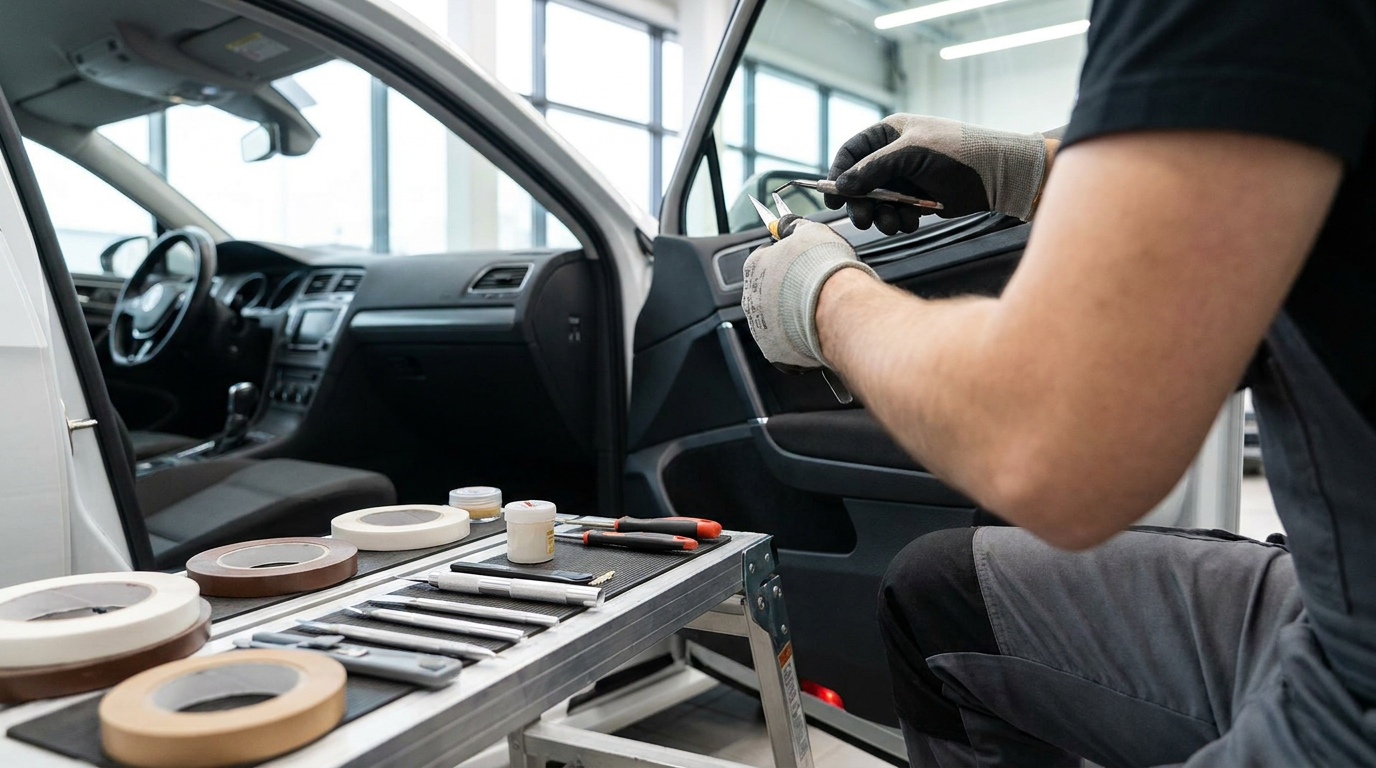
Glass & Trim Repair has announced the roll-out of a new smart repair franchise opportunity, expanding its operating footprint across the United Kingdom. Targeted at prospective business owners and entrepreneurs looking to establish an automotive repair business, the franchise initiative broadens the brand's reach into regional UK markets through a network of independent operators.
The announcement, published via the Quality Franchise Association (QFA), marks the formal opening of recruitment for franchisees nationwide. While the business has indicated that the concept is designed for ambitious individuals seeking to build their own repair enterprise, detailed commercial terms—such as initial franchise fees, vehicle fit-out specifications, territory definitions, and minimum liquid capital thresholds—have not been released in the initial notice and must be evaluated directly through the franchisor's franchise prospectus.
The development adds another specialist entrant into the UK automotive services franchise landscape. As smart repair techniques continue to serve both retail vehicle owners and business-to-business fleet clients, the brand’s expansion reflects ongoing appetite for decentralised, mobile, or regional technical service models.
Market Signals and the Expanding UK SMART Repair Sector
Small to Medium Area Repair Technology (SMART repair) has transitioned over recent decades from an alternative bodyshop service into a foundational pillar of the UK automotive aftercare industry. Specialising in localised interventions—including windscreen and glass repair, interior upholstery restoration, plastic welding, dashboard refurbishment, and leather rejuvenation—the sector operates on speed, cost efficiency, and convenience.
The introduction of a dedicated glass and trim repair franchise across the UK highlights several wider economic patterns within motor vehicle ownership. Firstly, the average age of vehicles on British roads has risen steadily, prompting private owners to invest in preventative maintenance and cosmetic upkeep rather than committing to vehicle replacement cycles. Secondly, the growth of personal contract purchase (PCP) agreements, business leasing, and corporate fleet schemes has created steady structural demand for rapid, high-standard cosmetic remediation to avoid penalty charges at the point of vehicle return.
From an operational perspective, smart repair models typically feature lower initial overheads than traditional, fixed-location accident repair centres. Because much of the work in this category is carried out via fully equipped mobile workshops or compact commercial premises, costs relating to commercial business rates, substantial property leases, and complex spray booth infrastructure are considerably mitigated. This commercial structure continues to make the sub-sector attractive to emerging franchisors seeking network growth without the capital constraints of heavy industrial real estate.