
← All news

Bread Ahead

Borough Market Faces Debate Over Business Expansion and Franchising

By UK Franchise Opportunities Editorial TeamPublished Updated
Borough Market Faces Debate Over Business Expansion and Franchising — UK franchise news

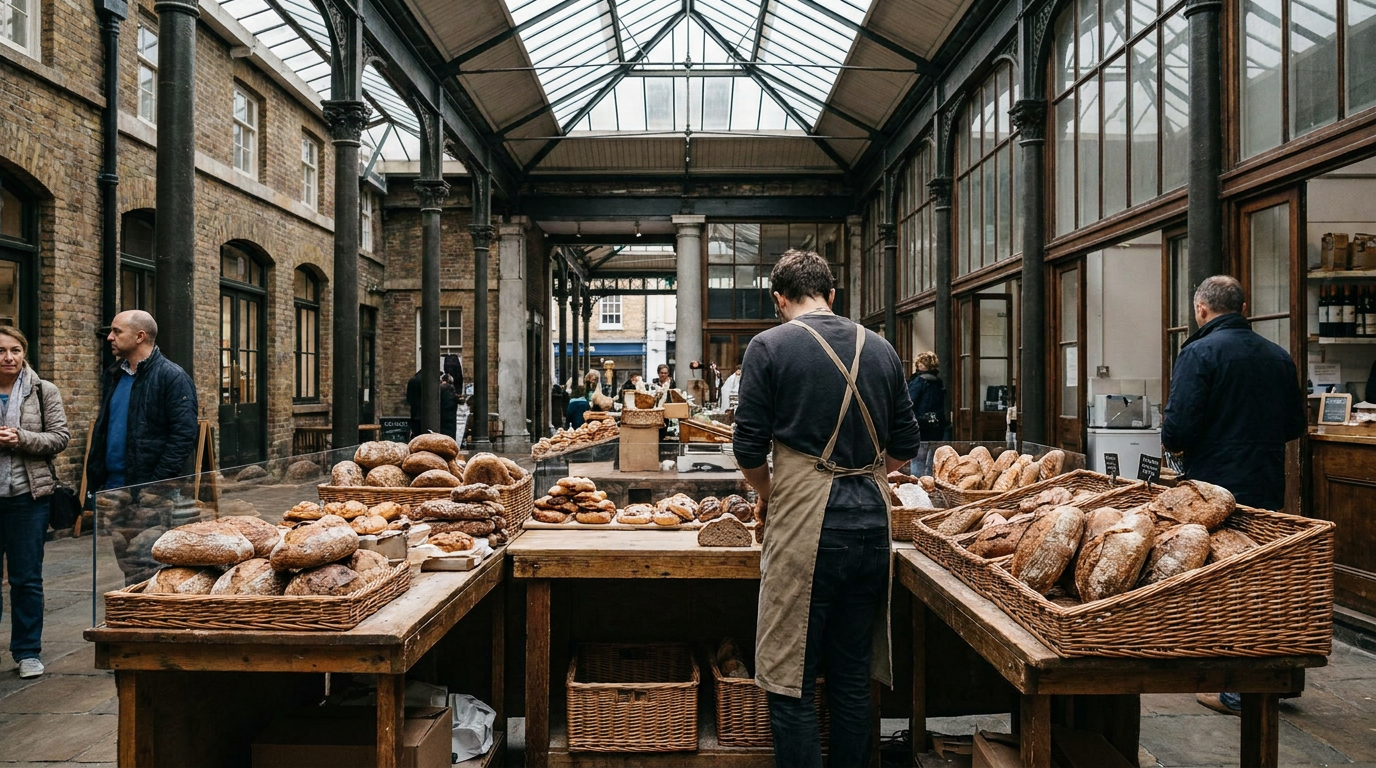
A debate has emerged over whether Borough Market should permit franchising and commercial expansion after bakery Bread Ahead claimed it faces removal following its business growth.

A dispute between London food destination Borough Market and bakery business Bread Ahead has brought the relationship between artisan trading locations and commercial business expansion into sharp focus. Bread Ahead has claimed that it faces removal from the historic market because management considers the venture to be too successful. The disagreement has triggered a wider debate among traders, commercial landlords, and enterprise observers over whether destination food markets ought to nurture and accommodate growing businesses, or actively restrict operators that pursue multi-site development and franchising.

The situation highlights a fundamental commercial friction that frequently arises when an independent stallholder develops into a scalable, high-volume retail brand. While Bread Ahead built a substantial portion of its profile within Borough Market, its subsequent commercial trajectory has raised questions about whether trading venues established to showcase micro-enterprises should permit or curtail corporate scaling. Specific contractual details, proposed departure dates, and formal statements from the market trust governing the site have not been publicly confirmed, leaving the wider retail sector to evaluate the operational implications of the dispute.

What the Conflict Signals About the Artisan Food Sector

The tension at Borough Market underlines a recurring challenge within the UK bakery and specialist food sector: the transition from independent street-food vendor to structured multi-unit operator. Landmark retail destinations often market themselves on authenticity, local provenance, and small-scale enterprise. However, commercially viable food businesses naturally seek avenues to capitalise on strong consumer demand, which frequently involves opening additional outlets, developing production facilities, or launching franchise programmes.

When a business operating within an artisan venue becomes highly recognisable, the commercial interests of the landlord and the tenant can diverge. Landlords overseeing heritage markets may fear that a brand will outgrow its micro-business aesthetic, potentially altering the character of the venue or displacing smaller, emerging producers. Conversely, business owners often argue that commercial success should be rewarded rather than penalised, and that market environments provide an essential testing ground for concepts that are ready to replicate nationally.

For the wider market, this highlights the necessity for growing food brands to diversify their operational footprints. Relying too heavily on a single flagship location—particularly one subject to strict tenant curation policies—presents strategic vulnerabilities. Brands aiming to expand through scalable models must navigate the line between retaining their specialist credibility and building the operational infrastructure demanded by standard commercial property portfolios.

Practical Context for UK Franchise Buyers

For prospective investors evaluating bakery and grab-and-go food franchises in the UK, situations of this nature offer critical lessons in due diligence. Artisan bakery franchises typically require considerable capital outlay, encompassing specialist baking equipment, extraction systems, front-of-house counters, and premises fit-outs. Prospective franchisees must look beyond the initial brand appeal and examine whether the original business model can be successfully transplanted from high-footfall tourist hubs to secondary high streets, retail parks, or suburban transport interchanges.

When assessing a food retail franchise, buyers should direct precise questions to the franchisor regarding estate strategy and operational sustainability:

  • What proportion of network turnover is derived from non-replicable flagship locations, such as central tourist markets, compared to standard regional units?
  • How secure are the company-owned premises agreements, and what contingency plans exist if flagship venues face lease terminations or planning hurdles?
  • Does the franchise information pack outline a clear supply chain model for baked goods, clarifying whether products are prepared fresh on-site or distributed from a central commissary kitchen?
  • What specific property criteria and minimum footfall metrics are required to achieve the unit economics projected in the franchise prospectus?

Scrutinising the financial figures presented in a franchise disclosure pack is vital. Prospective buyers should independently evaluate historical unit-level economics, stripping out non-recurring footfall anomalies. Gross margins on bakery goods can appear robust, yet net margins are frequently squeezed by rising ingredient costs, utility overheads, and specialist labour. Buyers must insist on reviewing profit and loss statements from a variety of operational territories rather than accepting financial models predicated solely on high-density destination sites.

Implications for Franchisors and Existing Franchisees

For franchisors, managing the growth of a brand without destabilising its core heritage requires careful balance. A dispute surrounding a flagship location can generate negative publicity and introduce operational uncertainty across the wider network. Existing franchisees rely on the brand's reputation to drive footfall in their respective local territories; disruptions at the concept's historic home can dilute consumer goodwill or raise questions about corporate governance.

Franchise systems must therefore design their network structures with long-term real estate stability in mind. Key considerations for franchisors and operational networks include:

  • Lease portfolio diversification: Ensuring the overarching brand identity and financial model do not depend disproportionately on landlords who prioritise artisan curation over commercial expansion.
  • Territorial replication: Proving that the retail format functions effectively within conventional commercial retail spaces before offering territories to prospective franchisees.
  • Brand messaging management: Communicating transparently with network operators during landlord disputes to prevent market speculation from affecting day-to-day trading.
  • Clear disclosure practices: Providing balanced performance representations within the franchise prospectus that distinguish between tourist-driven flagship trading and standard franchise territory forecasts.

What remains to be seen is how Borough Market formalises its ongoing policy toward expanding brands, and whether a viable compromise can be reached with Bread Ahead. As retail models evolve, landlords and expanding food brands across the UK will be watching closely to see whether historic market environments can adapt to multi-site expansion, or whether scaling businesses will increasingly be forced to establish their footprints elsewhere.

Reported from publicly available coverage. Details were correct at the time of writing.