
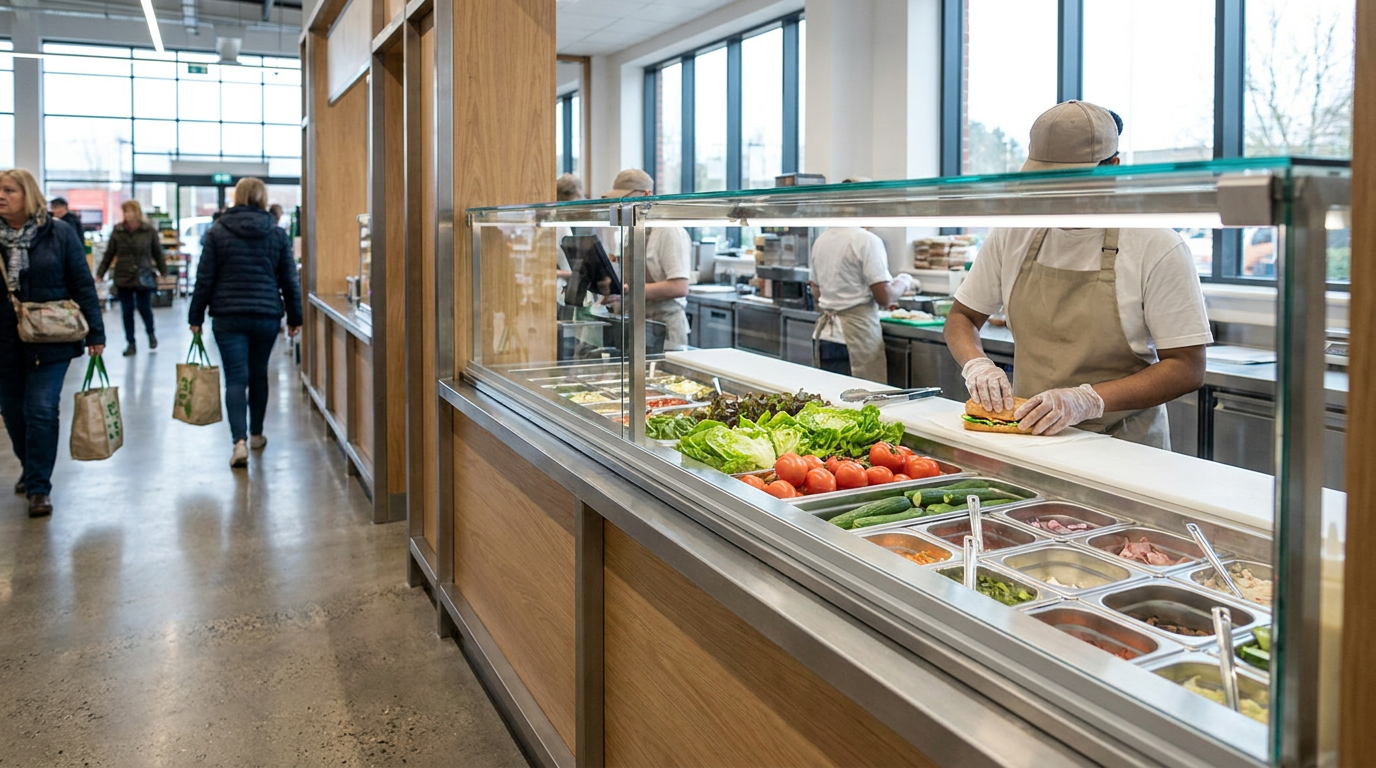
Sandwich chain Subway has expanded its partnership with supermarket giant Asda in an agreement that could introduce up to 70 new food-to-go outlets across the United Kingdom. The initiative broadens the existing relationship between the two businesses, placing more quick-service counters directly within supermarket premises to capture grocery customer footfall.
The UK development forms an integral part of Subway’s broader international expansion programme. Across the wider Europe, Middle East, and Africa (EMEA) region, the company has set a target to build its estate to 10,000 operational restaurants by 2031. Co-locating inside high-footfall retail stores is a recognised route for rapid physical expansion in mature markets.
Specific timelines, store formats, and regional locations for the planned 70 UK sites have not yet been published. However, the move demonstrates how international food brands continue to use non-traditional commercial property to sustain unit growth across Britain, adapting their footprints to spaces where everyday consumers already shop.
Market Signals: Non-Traditional Locations and Grocery Partnerships
The expansion reflects a sustained shift in how quick-service restaurant (QSR) brands approach commercial property in the UK. Traditional high streets and standalone retail parks remain central to many networks, but non-traditional environments—including supermarkets, travel hubs, fuel forecourts, and university campuses—offer distinct trading advantages. For operators, host locations provide built-in customer traffic, shared infrastructure, and established parking facilities that can lower site-acquisition barriers.