
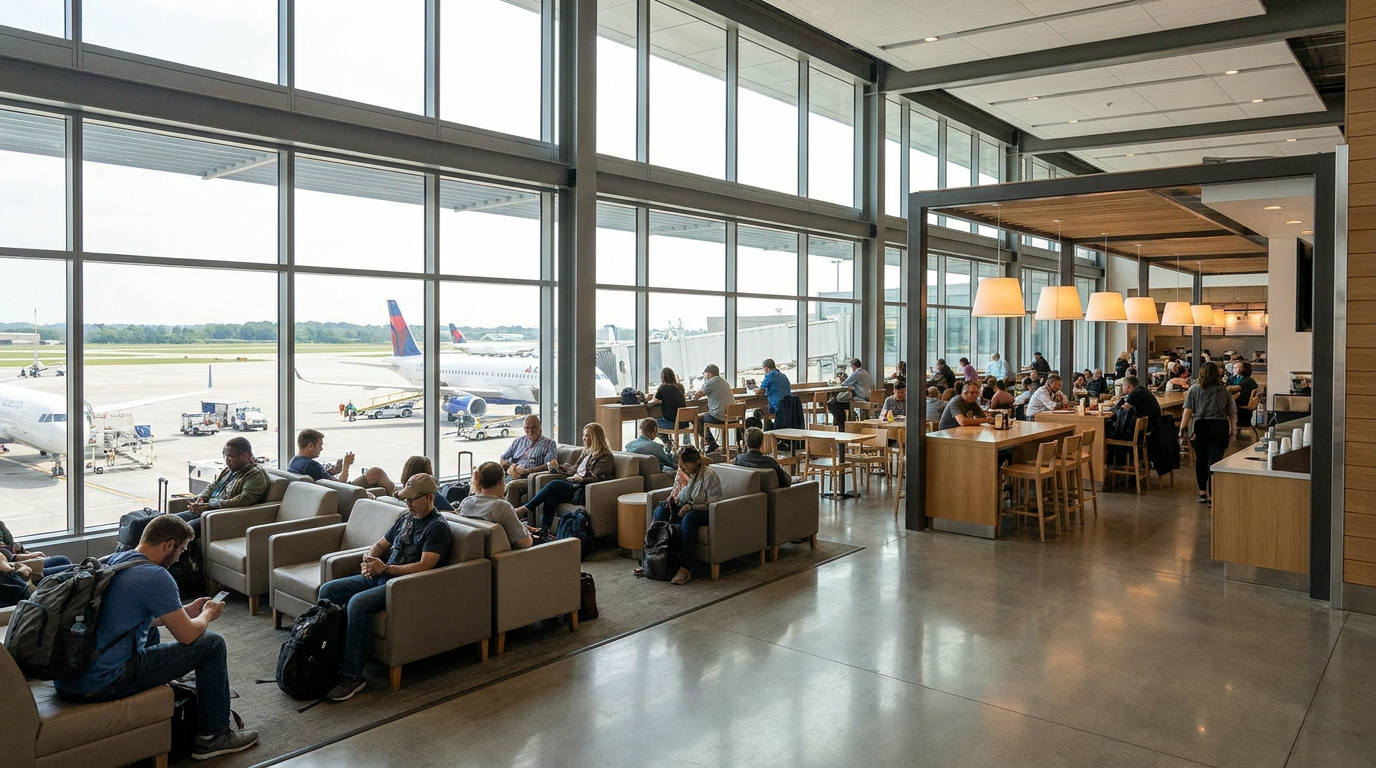
American dining brand Rusty Taco is expanding its footprint within the travel hospitality sector with the launch of an outlet at Washington Dulles International Airport. Scheduled to welcome passengers this November, the opening will mark the brand's second trading position within the international hub, reinforcing its commercial relationship with the airport facility.

The project is being delivered in partnership with Aero Taco LLC, the designated franchise operator for the venture. Positioned inside the airport's newly constructed Concourse E, the site will represent a notable operational milestone as the first full-service airport restaurant format developed across the Rusty Taco network.

The addition of a full-service hospitality concept inside an airside environment moves the brand beyond standard fast-casual formats. By offering dedicated table service alongside food and beverage provisions, the restaurant is designed to cater directly to passengers seeking a more relaxed dining setting prior to departure.

Sector Shifts and the Commercialisation of Travel Hubs

The development at Washington Dulles reflects wider commercial patterns across the food and beverage franchise landscape, where high-density transport infrastructure continues to serve as a primary target for estate expansion. Airside developments present franchise systems with guaranteed captive audiences, high footfall, and consistent day-part distribution that traditional high-street locations often struggle to replicate.

Historically, airport dining focused heavily on rapid, counter-service transactions prioritising customer processing speed. However, airport authorities and terminal operators have increasingly sought balanced concession mixes that integrate full-service establishments. Passengers facing extended dwell times, flight connections, or international departures often demonstrate a preference for seated table service rather than takeaway options, supporting higher average transaction values for operators.

Developing a full-service concept within an aviation hub requires substantial operational adaptation. Kitchen workflows must remain capable of delivering dishes within strict time constraints, ensuring that seated diners are not exposed to missing departure calls. Additionally, inventory storage is notoriously constrained within airport terminals, requiring brands to streamline menu offerings and refine just-in-time replenishment schedules.

Evaluating Non-Traditional Outlets: Guidance for UK Franchise Buyers

For individuals and investment groups exploring franchise acquisitions in the UK, the introduction of full-service brands into transport hubs highlights the distinct dynamics of non-traditional trading environments. Opportunities situated in railway stations, ferry terminals, motorway service areas, or regional airports differ fundamentally from standalone retail or high-street units.

Prospective franchisees assessing non-traditional opportunities must undertake rigorous due diligence before committing capital. A critical area of inquiry involves the nature of the lease and occupancy agreements. In travel hubs, franchisees rarely hold direct, standard commercial leases; instead, premises are typically operated via concession contracts or sublets through overarching facility management partners. Franchisees must verify how concession fees, base rents, and turnover-based rental structures interact, as these arrangements can substantially influence operational margins.

When reviewing a franchisor's franchise prospectus, information pack, or disclosure pack, prospective buyers must examine how financial modelling addresses the distinct overheads of restricted-access environments. Airside and secure transit trading incurs significant operational premiums. Staff require security vetting, background checks, and badging, which extends recruitment timelines and increases human resources expenditure. Logistics are similarly complex, as stock deliveries often pass through centralised screening facilities with limited access windows.

Key questions for prospective buyers to raise with the franchisor include:

  • Supply Chain Logistics: What dedicated delivery frameworks exist to supply goods into secure, restricted-access operating zones, and are there associated handling surcharges?
  • Operating Hours and Labour Costs: Does the site agreement impose mandatory operating hours spanning early morning to late night, and what are the projected labour costs required to maintain compliance?
  • Refurbishment Cycles: What are the franchisor's and landlord's stipulated capital expenditure cycles for interior fit-out updates throughout the term of the agreement?
  • Benchmark Performance: Can the franchisor provide verifiable performance data from existing non-traditional or transit locations, rather than relying solely on projections derived from standard high-street units?

Any financial projections supplied within an information pack should be audited independently by a specialist accountant experienced in UK franchise structures. Scrutinising gross margin sensitivities against elevated rent and utility charges ensures that prospective owners fully understand their baseline break-even thresholds.

Strategic Implications for Franchisors and Network Operators

The roll-out of tailored operational formats into complex transport infrastructure offers meaningful strategic lessons for expanding franchise systems and multi-unit operators.

Successfully configuring a brand to trade within airport terminals demonstrates operational flexibility, proving that core brand standards can survive the physical and logistical limitations of non-standard property footprints. These ventures also function as substantial marketing platforms, placing the brand in front of thousands of regional and international travellers daily.

  • Specialist Operator Partnerships: Partnering with experienced multi-unit entities, such as Aero Taco LLC, provides franchisors with the specialized operational and regulatory expertise necessary to navigate airport concession requirements.
  • Format Diversification: Adapting from quick-service to full-service models expands the brand's addressable commercial real estate opportunities without alienating core customers.
  • Enhanced Brand Exposure: Concourse installations generate brand impressions across broad demographic cross-sections, delivering indirect marketing value that supports the wider franchise system.
  • Operational Cross-Pollination: Techniques developed to manage tight turn times and compact back-of-house layouts in terminal units frequently yield operational efficiencies that can be applied across standard high-street locations.

Monitoring Performance Post-Launch

Industry observers and prospective hospitality investors will watch the Concourse E opening closely once operations commence in November. Key indicators of the project's long-term viability will include table turnover rates during peak bank flight schedules, customer satisfaction among time-sensitive passengers, and the financial sustainability of the full-service staffing model within an airport setting. The outcomes achieved by Aero Taco LLC at Washington Dulles are likely to influence whether Rusty Taco targets further full-service conversions across other regional and international aviation terminals in the future.

Reported from publicly available coverage. Details were correct at the time of writing.