
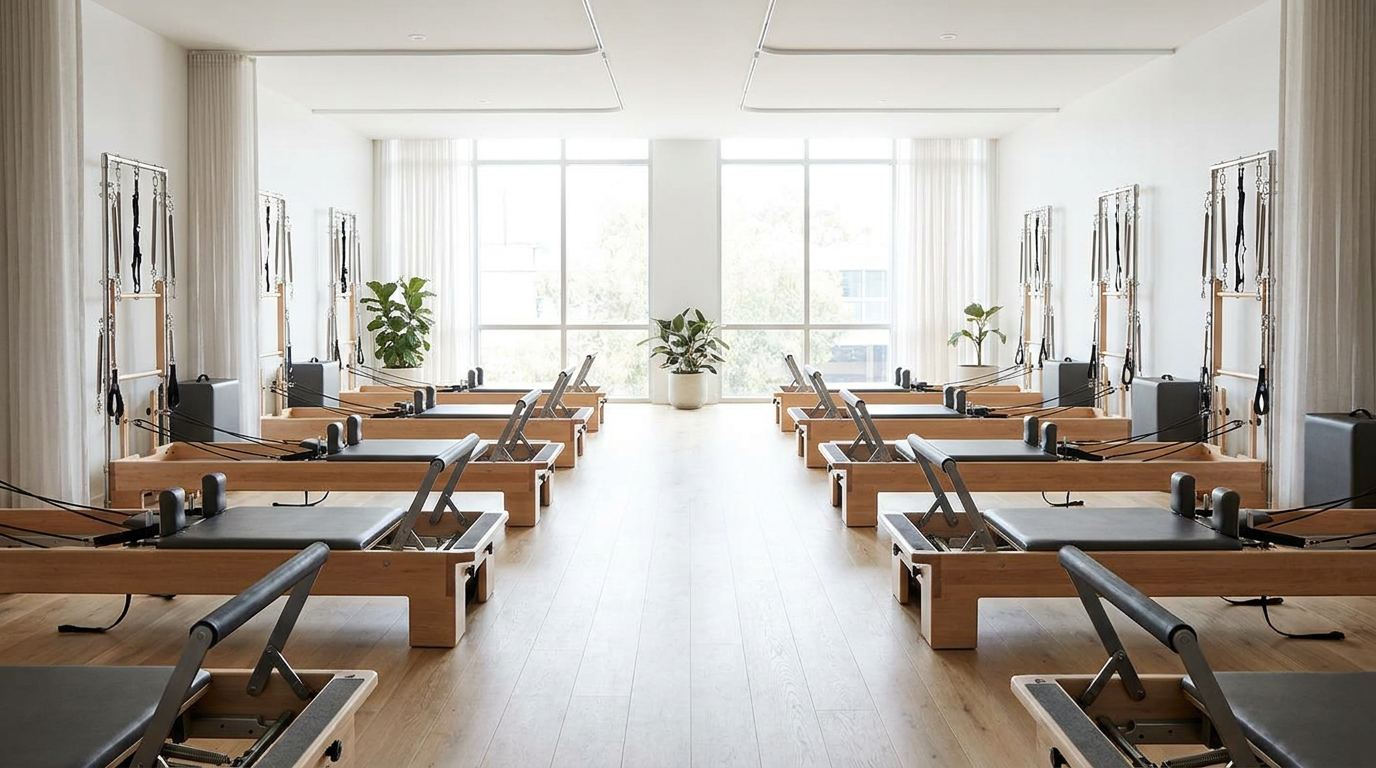
Franchise brand PILAT3S has expanded its UK network footprint with the launch of its inaugural standalone studio in London, situated in the south-west district of Putney. The opening represents a strategic milestone for the business, marking its first independent venue in the capital operating under a dedicated franchise structure.
Early trading metrics released for the Putney location indicate strong local engagement during its initial commercial window. Throughout its first full week of operation, the studio logged nearly 300 client attendances. Demand was particularly pronounced during the venue's first weekend of trading, with the operator reporting a 96 per cent occupancy rate across its scheduled classes on its opening Saturday.
While these initial participation figures have been made public, further commercial specifics regarding the site have not been disclosed. Details concerning the overall capital investment required, the square footage of the premises, and the commercial background of the appointed franchisee remain unconfirmed. Nonetheless, the launch provides an observable operational benchmark for the concept within Greater London's competitive fitness landscape.
Market Signals in the Specialist Fitness Sector
The establishment of a dedicated studio in Putney points to ongoing consumer appetite for specialised, boutique exercise modalities across affluent London suburbs. In recent years, the broader UK fitness market has experienced a clear division between large, low-cost budget gym chains and premium, class-based studios. Disciplines such as reformer and mat pilates have increasingly captured consumer spend, appealing to demographics seeking structured, small-group instruction over unguided gym access.
Achieving high utilisation rates on weekend mornings is standard for commuter-belt locations, as reflected in the reported 96 per cent occupancy figure on the venue's debut Saturday. However, the commercial sustainability of standalone fitness venues typically hinges on regular weekday footfall. For franchise networks operating in metropolitan suburbs, studio schedules must generate balanced demand across traditionally quiet mid-morning and early afternoon periods to offset fixed urban overheads.
Opting for a standalone commercial property—rather than a concession or a shared facility—also demonstrates a high level of brand maturity and commitment. Dedicated sites allow franchisors to enforce precise operational environments, strict aesthetic standards, and proprietary class formats. Conversely, standalone units require franchisees to take on direct commercial leases, planning requirements, and elevated property maintenance commitments.
Due Diligence and Financial Scrutiny for Prospective Buyers
For individuals evaluating franchise opportunities in the specialist studio sector, early launch statistics must be examined alongside long-term operating economics. Introductory pricing, opening offers, and regional marketing pushes frequently drive initial attendance figures during the opening weeks of a new fitness facility. A prudent prospective franchisee should therefore assess how initial trial visits convert into recurring, contracted memberships over a three-to-six-month timeline.
When reviewing a franchise prospectus or information pack for a studio-based business, prospective buyers should focus on several fundamental financial and operational areas:
Property fit-out and lease obligations: Standalone fitness spaces require capital-intensive initial preparation. Prospective owners must confirm whether the initial fee includes design, architectural sign-off, soundproofing, and climate control installation. Clarification is also required regarding planning classifications, landlord rent-free periods, and minimum lease terms.
Equipment sourcing and lifecycle costs: Specialist pilates apparatus requires periodic maintenance, insurance, and eventual replacement. Franchise candidates must clarify whether equipment is purchased outright, leased through an approved supplier, or covered under ongoing franchisor support agreements.
Staff recruitment and wage structures: Boutique studios rely entirely on high-quality instructors to drive member retention. Buyers need to determine whether the franchisor operates a dedicated instructor training academy, what hourly rates are viable within the local market, and how staffing coverage is maintained during periods of absence.
Before entering into any binding franchise agreement, prospective investors should commission an independent assessment of the franchisor's disclosure pack by a commercial solicitor and an accountant experienced in UK franchise structures. Scrutinising existing mature units across the network provides an objective measure of unit profitability, break-even timelines, and working capital requirements.
Implications for Network Growth and Existing Franchisees
For both emerging and established franchise systems, establishing a presence in London provides considerable brand validation. A successful capital launch enhances national credibility and can assist franchisors when negotiating broader supplier terms or property access. For existing network operators, prime urban sites can drive overall brand awareness, which often benefits regional franchisees through greater consumer recognition.
The introduction of standalone units into major metropolitan areas highlights several operational takeaways for the wider franchise sector:
- Proving metropolitan unit economics: Operating successfully in high-rent suburban markets proves that a brand's operating model can withstand significant fixed occupancy costs, reassuring prospective network investors.
- Protecting operational territories: In densely populated urban areas, franchisors must define territory boundaries clearly within the franchise contract to prevent network cannibalisation as regional density increases.
- Supply chain resilience: Rolling out specialised standalone sites tests a franchisor's vendor network, verifying whether equipment, interior fixtures, and technology platforms can be delivered reliably on schedule.
- Standardised launch protocols: A structured opening playbook that generates near-capacity attendance in week one offers a replicable template for future franchisees entering comparable territories.
Evaluating Medium-Term Studio Sustainability
Industry analysts will monitor how the Putney studio performs once its introductory launch period concludes and normalised attendance patterns emerge. Long-term commercial health will be defined by member retention rates, secondary spend, and consistent off-peak class utilisation. Subsequent updates regarding network expansion, further site acquisitions in London, and published trading performance will indicate whether this standalone model offers a viable, repeatable pathway for prospective franchisees nationwide.
Reported from publicly available coverage. Details were correct at the time of writing.