
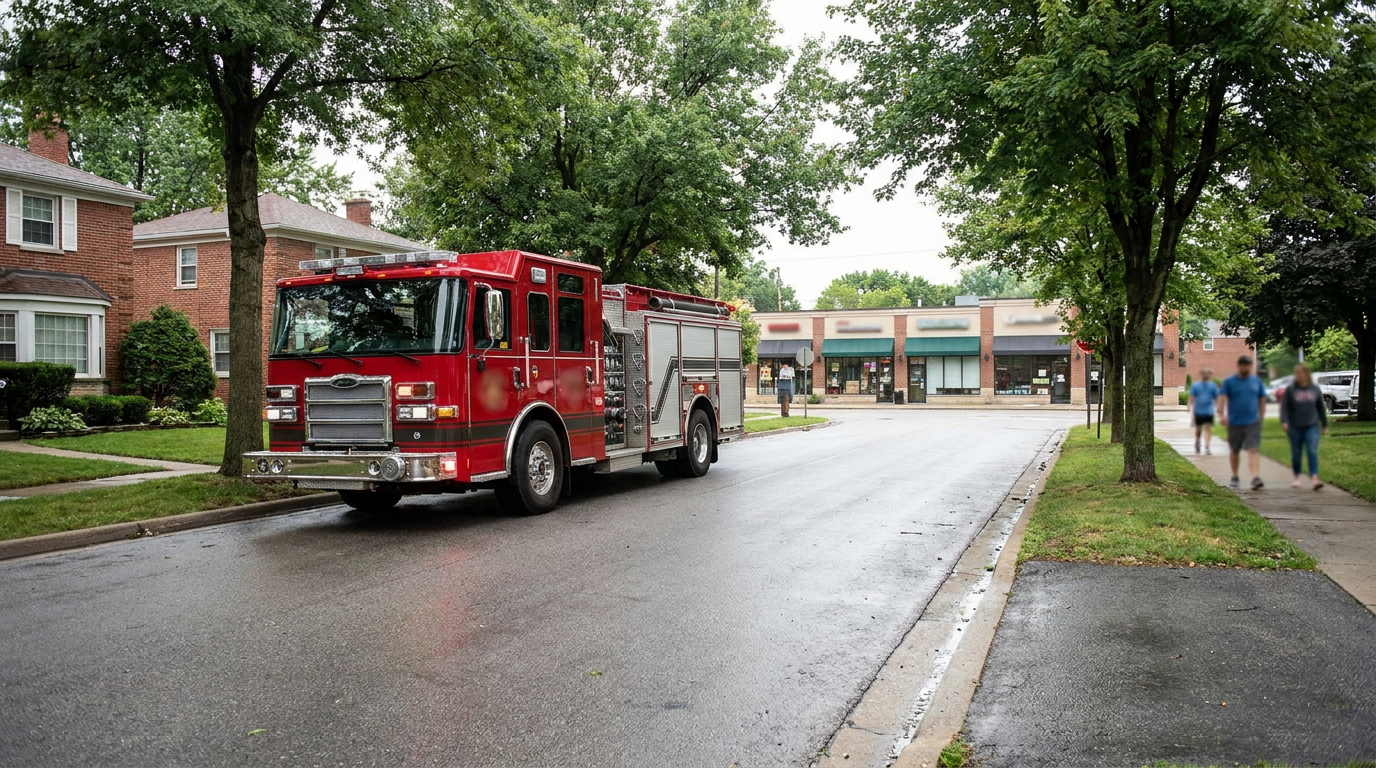
Domino’s Pizza Inc., recognised as the largest pizza company in the world, has entered into a nationwide safety collaboration with the National Fire Protection Association (NFPA) in the United States. Under the initiative, participating corporate-owned and franchise-owned stores across the country are joining forces with local fire departments to distribute home safety advice directly to residential customers.
The campaign is scheduled to take place during Fire Prevention Week, running from 4 October to 10 October. During this period, customers ordering from participating outlets may experience an unusual delivery arrival, as emergency services personnel and store teams combine regular food drops with the promotion of domestic fire safety checks. The collaboration uses the brand’s established domestic delivery routes to carry public service announcements straight to household doorsteps.
Although the programme is focused on participating branches across the US, it illustrates how major quick-service restaurant (QSR) networks utilise their operational scale. By involving both corporate sites and independent franchise operators, the initiative relies on uniform execution across two distinct operating structures to support a national public awareness campaign.
What the Campaign Signals About the Delivery and Food Sector
This joint initiative highlights the unique physical access that food delivery networks hold within modern retail. Unlike traditional brick-and-mortar retailers that rely entirely on footfall entering a commercial premises, delivered-food operators maintain direct, recurring access to domestic residences. In an increasingly competitive convenience market, coupling standard delivery operations with non-commercial or civic messaging serves as a way to reinforce community presence beyond standard promotional discounting.
The campaign also reflects the reliance of large franchised systems on local community integration. While central brand owners can negotiate national agreements with bodies such as the NFPA, the actual execution depends entirely on store-level cooperation between local franchisees, store managers, and municipal emergency services. In the delivery sector, where customer loyalty can be volatile and driven primarily by aggregator platforms, building direct goodwill within neighbourhoods remains a priority for operators seeking to preserve proprietary ordering channels.
Furthermore, coordinating campaigns across both company-owned and franchised branches demonstrates the necessity of high operational consistency. When corporate marketing teams introduce external partners into daily operations, store routines must be resilient enough to manage the disruption without compromising core service standards, delivery speed, or product temperature.
Practical Considerations for UK Franchise Buyers
For prospective investors looking at the UK food and delivery sector, high-profile campaigns from global brands demonstrate the benefits of buying into an established network, but they also highlight the day-to-day operational complexities of running a food franchise. Prospective franchisees should understand what operating within such a structured system entails before committing capital.
In the UK, securing a territory in a fast-food or delivery network typically requires substantial investment in commercial premises, extraction systems, vehicle fleets, and staffing. When evaluating these opportunities, buyers should carefully review the franchise prospectus or information pack provided by the franchisor. It is essential to distinguish between corporate-wide turnover projections and realistic unit-level economics.
When assessing a franchise disclosure pack, prospective franchisees should consider several key lines of inquiry:
- Marketing levies and national campaigns: Clarify what percentage of turnover is contributed to the central marketing fund, and ascertain how much of that budget is allocated to high-level brand awareness versus local, store-level customer acquisition.
- Operational flexibility: Ask whether participation in national civic or promotional partnerships is mandatory, and determine who absorbs the operational costs associated with store-level disruptions or promotional materials.
- Unit-level margins: Cross-reference financial models with independent trading data. Account for local labour costs, delivery insurance, business rates, and waste margins rather than relying solely on franchisor averages.
- Territory and delivery parameters: Review contractual delivery boundaries to verify that an assigned territory provides sufficient household density to support order volumes throughout the week.
Prospective operators should also consult existing franchisees within the network to determine whether central initiatives generate measurable returns in order frequency or customer retention. Independent advice from commercial solicitors and accountants familiar with franchise agreements is crucial to verifying all financial representations before signing.
Strategic Implications for Franchisors and Network Operators
For franchisors and multi-unit operators, executing partnerships with public sector bodies or national non-profit organisations requires balancing brand-building with field-level operational realities. When managed effectively, these initiatives generate significant positive exposure, but they also place temporary demands on store teams.
Key considerations for franchise leadership teams include:
- System-wide alignment: Ensuring that both company-owned units and independent franchisee sites adhere to the same execution standards to protect the integrity of the campaign.
- Operational safeguards: Structuring third-party partnerships so that customer service delivery times, driver safety, and hygiene standards are not compromised by secondary activities.
- Brand value versus commercial friction: Providing franchisees with clear evidence of how civic engagement enhances long-term brand equity, especially when direct commercial gain is not the immediate objective.
- Local stakeholder coordination: Establishing clear operational protocols so that individual store managers can liaise effectively with public services without requiring constant corporate intervention.
Looking Ahead
As the campaign unfolds during Fire Prevention Week between 4 October and 10 October, industry observers will be watching how effectively participating US stores execute the initiative across varied operating territories. The outcomes of this joint effort with the NFPA may provide a template for how delivery-focused franchise systems globally, including those in the UK, can leverage their domestic delivery infrastructure for civic and brand-building partnerships in the future.
Reported from publicly available coverage. Details were correct at the time of writing.